
Innovative assessment for skin cancer
Proven Performance, Validated by Science.
DermaSensor is an FDA cleared, AI-powered solution with clinically validated performance for detecting skin cancer.
Meaningful Outcomes in Primary Care
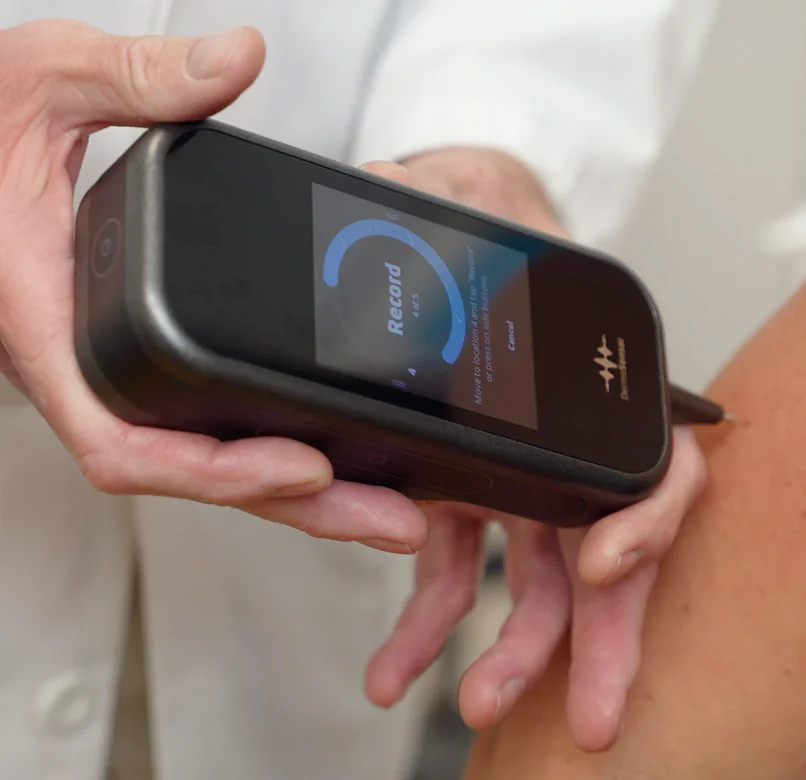
Real-Time Evaluation During Routine Visits
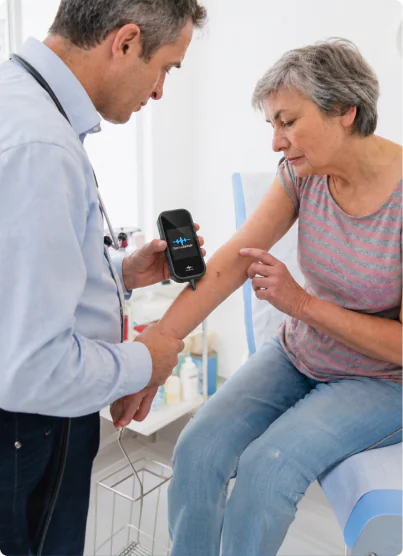
The DermaSensor device provides immediate results following a non-invasive assessment, allowing busy clinicians to efficiently assess suspicious lesions without disrupting routine workflows.
Greater Confidence and Fewer Missed Cancers
Clinical studies show that the device improved primary care physician (PCP) diagnostic sensitivity and accuracy and reduced missed skin cancer referrals by 30% to 52%, so clinicians can identify lesions that require further evaluation with greater accuracy and confidence.*

Improved Patient Experience and Satisfaction
Compared to waiting for a specialist referral, patients can receive an objective skin cancer assessment during the same visit that the concern was raised, enhancing convenience and patient satisfaction.
*See the publications document under the resource section
New Reimbursement Assistance

Expert Reimbursement Support Is Now Available
DermaSensor customers receive coding and reimbursement guidance through our partnership with The Reimbursement Group (TRG). Certified coders are available to help practices navigate payer requirements and reimbursement pathways.

Documentation and Coding Guidance for Claims
Through our partnership with TRG, coding guidance is available to help prepare documentation for both government and commercial insurers, along with access to the latest resources to support coverage and payment.

One-on-One Billing Support When You Need It
Practices can connect directly with a TRG reimbursement specialist for individualized assistance and clarity on payer requirements to streamline the reimbursement process.

Evidence Overview
Book a Device Demo-
Objective Risk Output
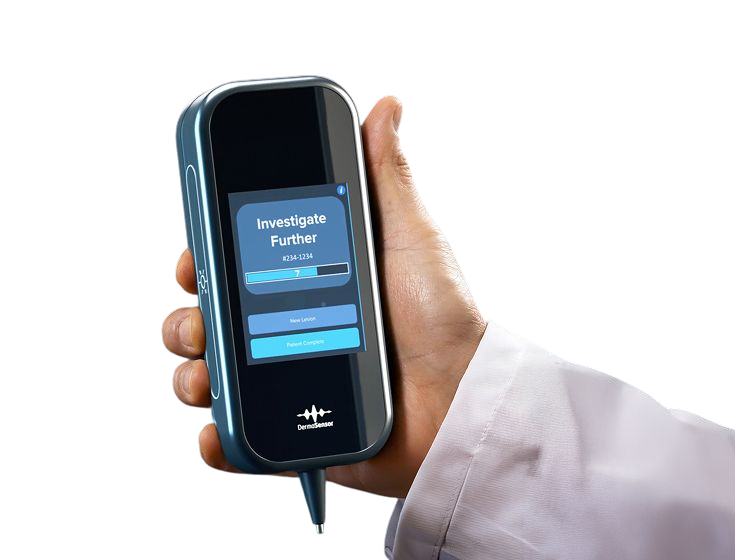
The DermaSensor device provides a real-time “Monitor” or “Investigate Further” skin cancer risk result to help determine whether a suspicious lesion should be monitored or should receive additional evaluation.
-
Spectral Score Insight
Positive results include a 1 to 10 spectral score that reflects increasing likelihood of malignancy for the three primary skin cancer types: melanoma, basal cell carcinoma, and squamous cell carcinoma.
-
Supports Clinical Judgment During Evaluation
DermaSensor is designed to support, not replace, clinical and visual assessment during evaluation of suspicious lesions.
-
Validated in Primary Care Settings
Clinical studies conducted in primary care settings demonstrated 96% sensitivity and 97% Negative Predictive Value (NPV) for detecting skin cancers.*
*See the publications document under the resource section
An Automated, AI-Powered Lesion Assessment in Seconds
Decreased Missed
Skin Cancers
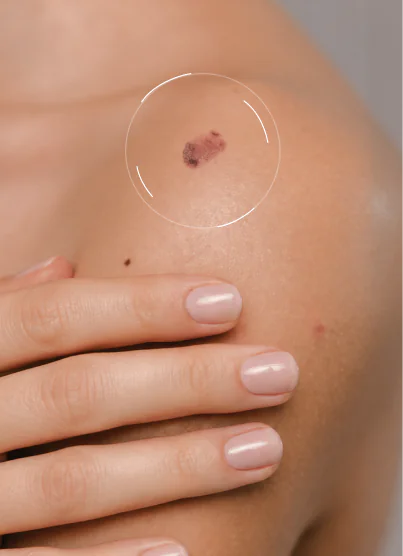
FDA pivotal study with 108 PCPs found device use decreases missed cancers by half and increases overall accuracy.
Reduce
Unnecessary Referrals
FDA pivotal study and accompanying dermatology validation study showed device can rule out cancer for 21-33% of benign lesions that physicians’ biopsy, or up to 61% of benign lesions of concern to patients.
Improve Cancer Diagnosis and Treatment Velocity
In addition to device use improving cancer detection, the 1-10 cancer risk scale can be used to prioritize high-risk referrals when access to dermatology is challenging.
Note: The 61-77% results are from PATIENT – SELECT which was a screening like study design of patient selected lesions (i.e., not solely physician – selected lesions, per the indicated use).
FAQs About Primary Care
How does the DermaSensor device work?
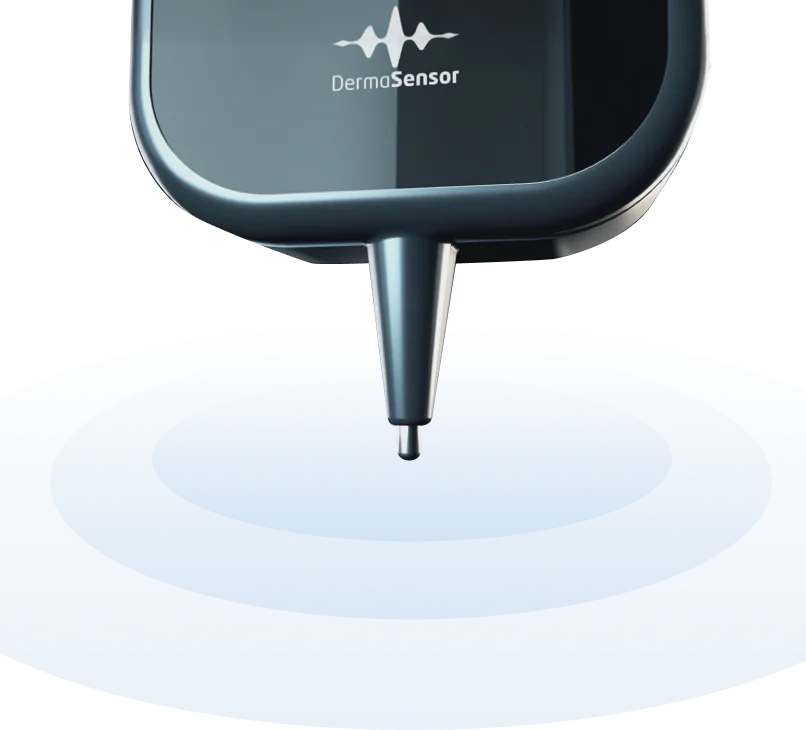
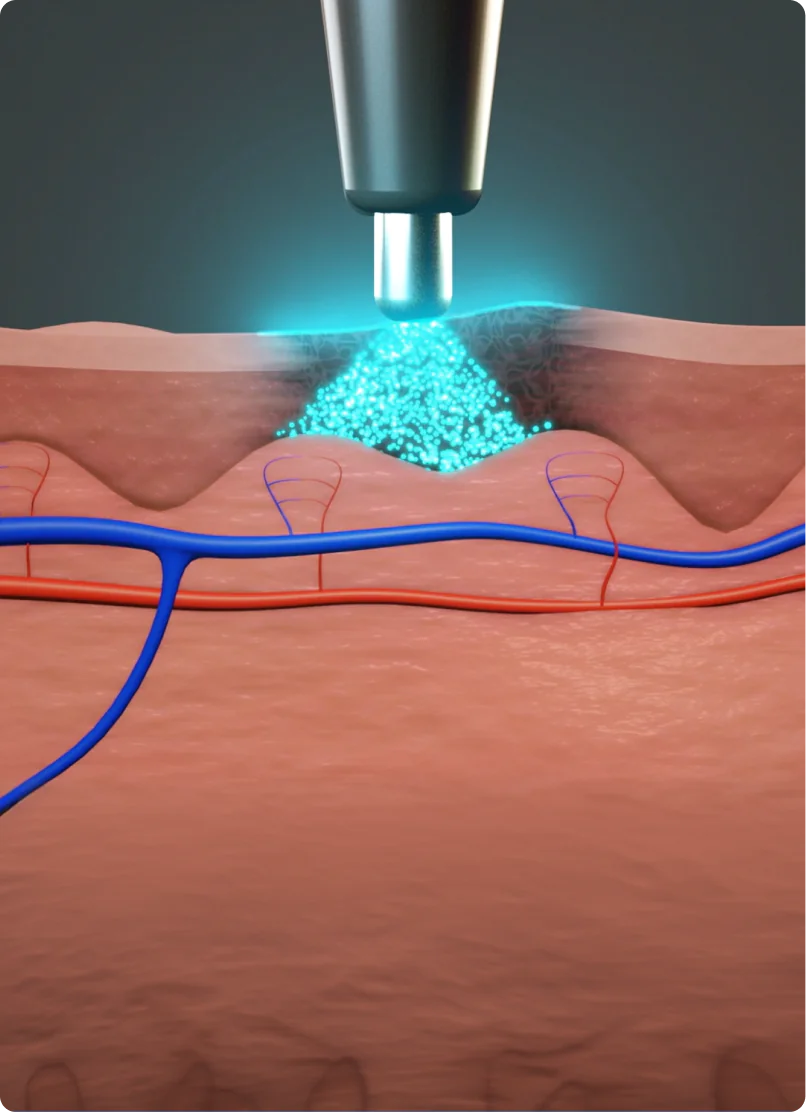
The handheld device delivers brief pulses of light through a fiber-optic probe tip to the lesion surface and collects the backscattered light from beneath the surface of the tissue, a technique called elastic scattering spectroscopy. DermaSensor does not use cameras or imaging. The patterns of backscattered light from cellular and sub-cellular features are analyzed by a sensor, which detects the spectral signatures unique to the given lesion’s tissue composition. A locked, validated, and proprietary artificial intelligence algorithm analyzes this spectral pattern to detect cellular patterns and characteristic known to be associated with melanoma, basal cell carcinoma, and squamous cell carcinoma. The algorithm does not “learn” or evolve based on continued use. The device processes the data locally within the handheld and provides an immediate point-of-care result displayed as either “Monitor” (negative) or “Investigate Further” (positive). For positive results, the device provides a Similarity Score from 1-10, with higher scores indicating greater similarity to malignant lesions. The Similarity Score can also help guide prioritization of referrals. DermaSensor should be used in conjunction with clinical assessment, not as a standalone diagnostic tool. Please review all warnings and precautions in the Instructions For Use
Does DermaSensor’s AI algorithm continue to learn from new data?
No. The DermaSensor algorithm is locked, as required by FDA regulations for this kind of medical device. The current authorized algorithm was validated through prospective clinical trials and cannot change in any way without new studies and new authorization by FDA.
What clinical evidence supports DermaSensor?
DermaSensor’s FDA clearance is supported by ten clinical studies enrolling over 1,300 subjects
and more than 2,000 pathology-verified lesions across over 30 study sites.
The pivotal DERMSUCCESS study was an international, multicenter, prospective, blinded trial conducted at 22 sites with 30 primary care physicians, enrolling 1,005 patients with 1,579 lesions. The device demonstrated 96.3% sensitivity for all common skin cancers (melanoma, BCC, SCC) on patients 40 and above. Standalone melanoma sensitivity was 90.2% with a negative predictive value of 98.1%.
Three multi-reader, multi-case (MRMC) studies involving over 280 primary care physicians
consistently demonstrated that DermaSensor significantly improves physician performance. In
the pivotal reader study, PCP’s sensitivity to correctly evaluate lesions increased from 82.0% to 91.4% with device use (p=0.0027), cutting false negative referrals in half. The DERM-ASSESS III study, conducted at ten high-volume skin cancer dermatology practices, demonstrated melanoma sensitivity of 95.5%. No adverse events were reported in any of the clinical trials.
How much does DermaSensor cost?
DermaSensor is designed to be affordable and accessible through a subscription model, eliminating upfront capital costs. We offer subscription plans and services based on your anticipated device usage. Our subscription plan and services include comprehensive benefits: customer success and support, certified reimbursement support, web-based software portal, remote device monitoring and a range of on-demand clinical resources, videos and tutorials.
To discuss pricing and reimbursement, request a demo by emailing sales@dermasensor.com, or call +1 (877) 814-8232.
Can DermaSensor be used on all skin types?
Yes, DermaSensor has received FDA clearance for use on all Fitzpatrick skin types (I-VI). Clinical studies included patients across all skin types, with consistent device performance observed regardless of patients’ skin pigmentation.
80-0009.11
