
 Read Now
Articles
Real-World DermaSensor Results in Primary Care
See real-world DermaSensor results from a primary care practice, including skin cancer diagnoses, diagnostic yield, referrals, and device use.
Skin Cancer Insights
Discover our latest resources like blog posts, webinars, white papers, case studies and solution briefs, with insightful information on the AI-powered device that detects skin cancer.
 Read Now
See real-world DermaSensor results from a primary care practice, including skin cancer diagnoses, diagnostic yield, referrals, and device use.
 Read Now
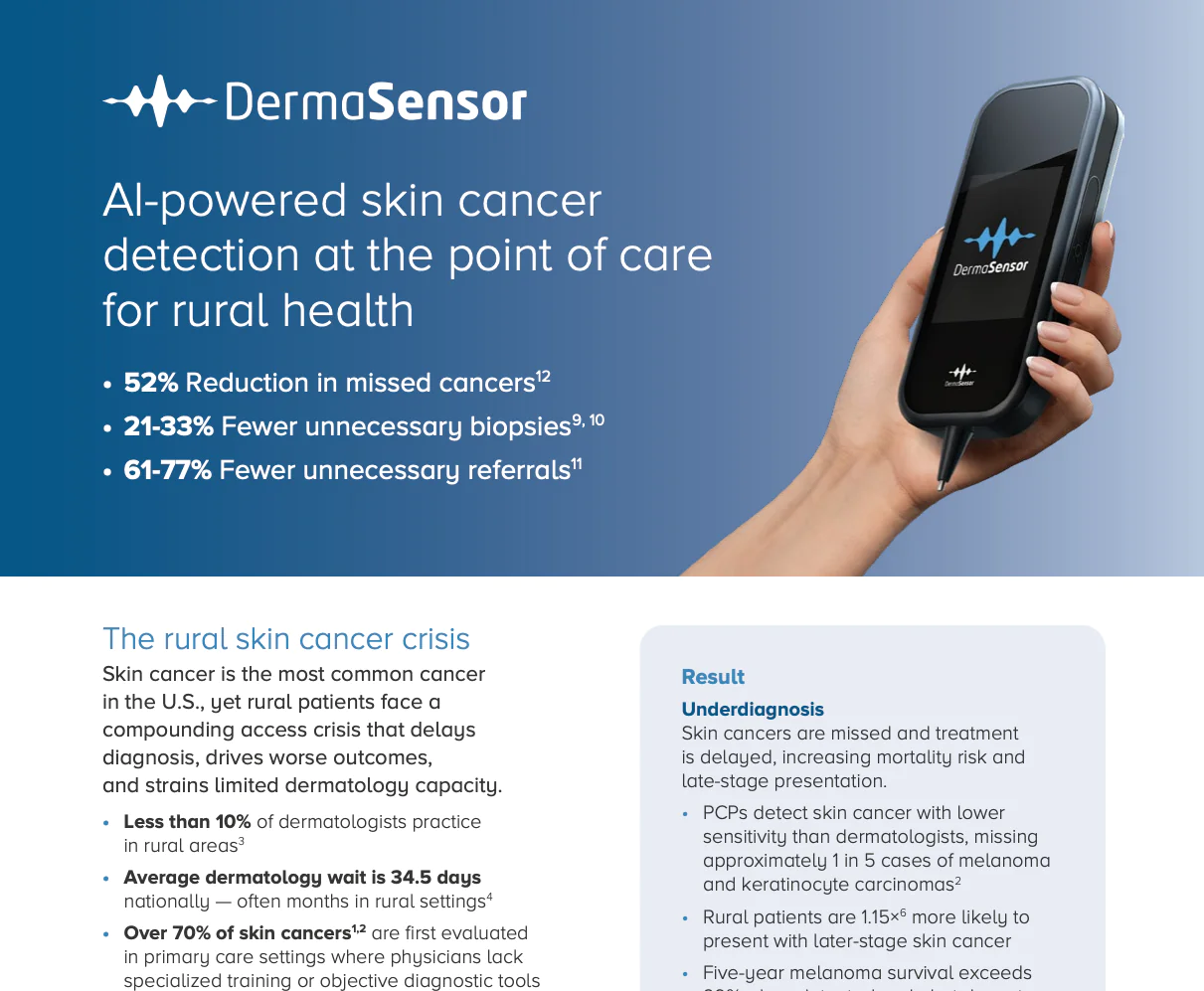
The rural skin cancer crisis Skin cancer is the most common cancer in the U.S., yet rural patients face a compounding access crisis that delays diagnosis, drives worse outcomes, and strains limited dermatology capacity. What DermaSensor brings DermaSensor — device overview DermaSensor[TM] is the first FDA-cleared AI-powered skin cancer risk detection device designed for primary […]
 Read Now
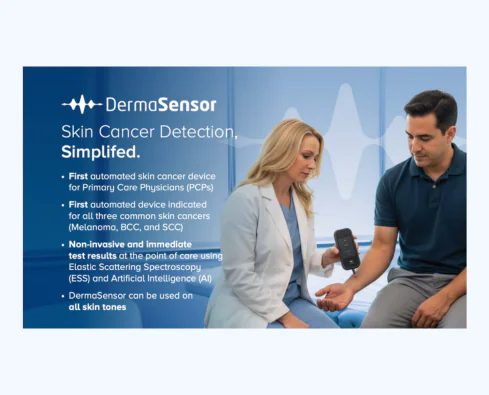
Better decisions, better detection, more accurate management DermaSensor empowers physicians by providing objective, actionable risk results to aid in skin cancer detection by assessing cellular and sub-cellular features that cannot be seen visually or dermoscopically. Features Indications for use The DermaSensor™ device is indicated for evaluating skin lesions suggestive of melanoma, basal cell carcinoma, and/or […]
 Read Now
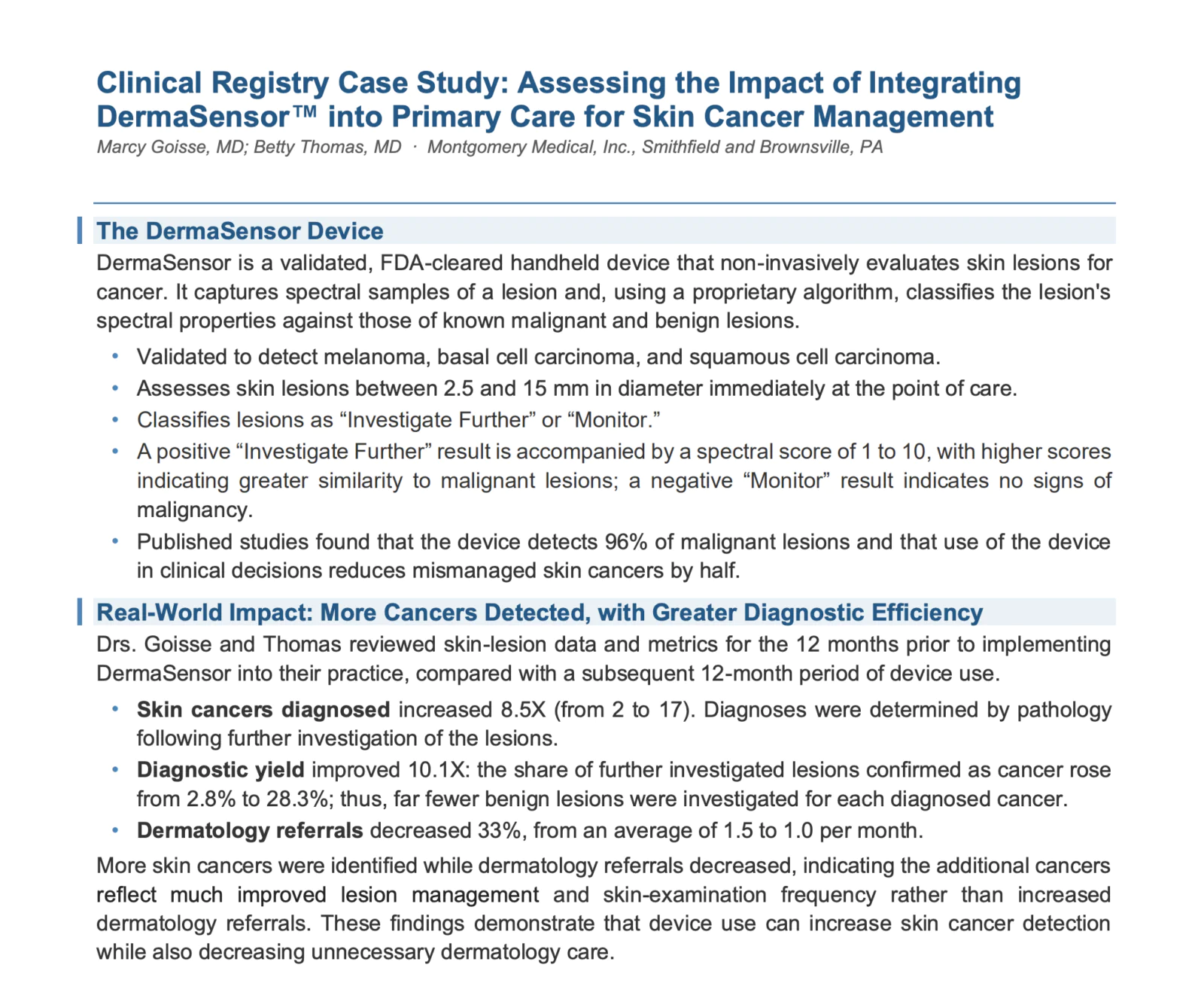
The DermaSensor DeviceDermaSensor is a validated, FDA-cleared handheld device that non-invasively evaluates skin lesions forcancer. It captures spectral samples of a lesion and, using a proprietary algorithm, classifies the lesion’sspectral properties against those of known malignant and benign lesions. Real-World Impact: More Cancers Detected, with Greater Diagnostic EfficiencyDrs. Goisse and Thomas reviewed skin-lesion data and […]
 Read Now
FDA Cleared
 Read Now
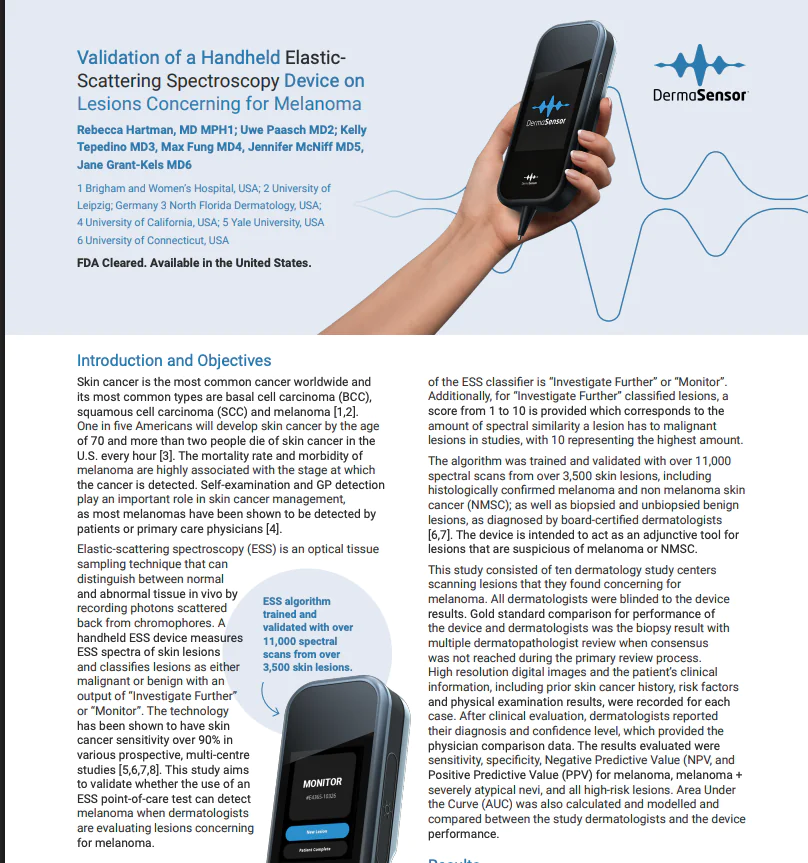
Introduction and Objectives Skin cancer is the most common cancer worldwide and its most common types are basal cell carcinoma (BCC), squamous cell carcinoma (SCC) and melanoma [1,2]. One in five Americans will develop skin cancer by the age of 70 and more than two people die of skin cancer in the U.S. every hour […]
 Read Now
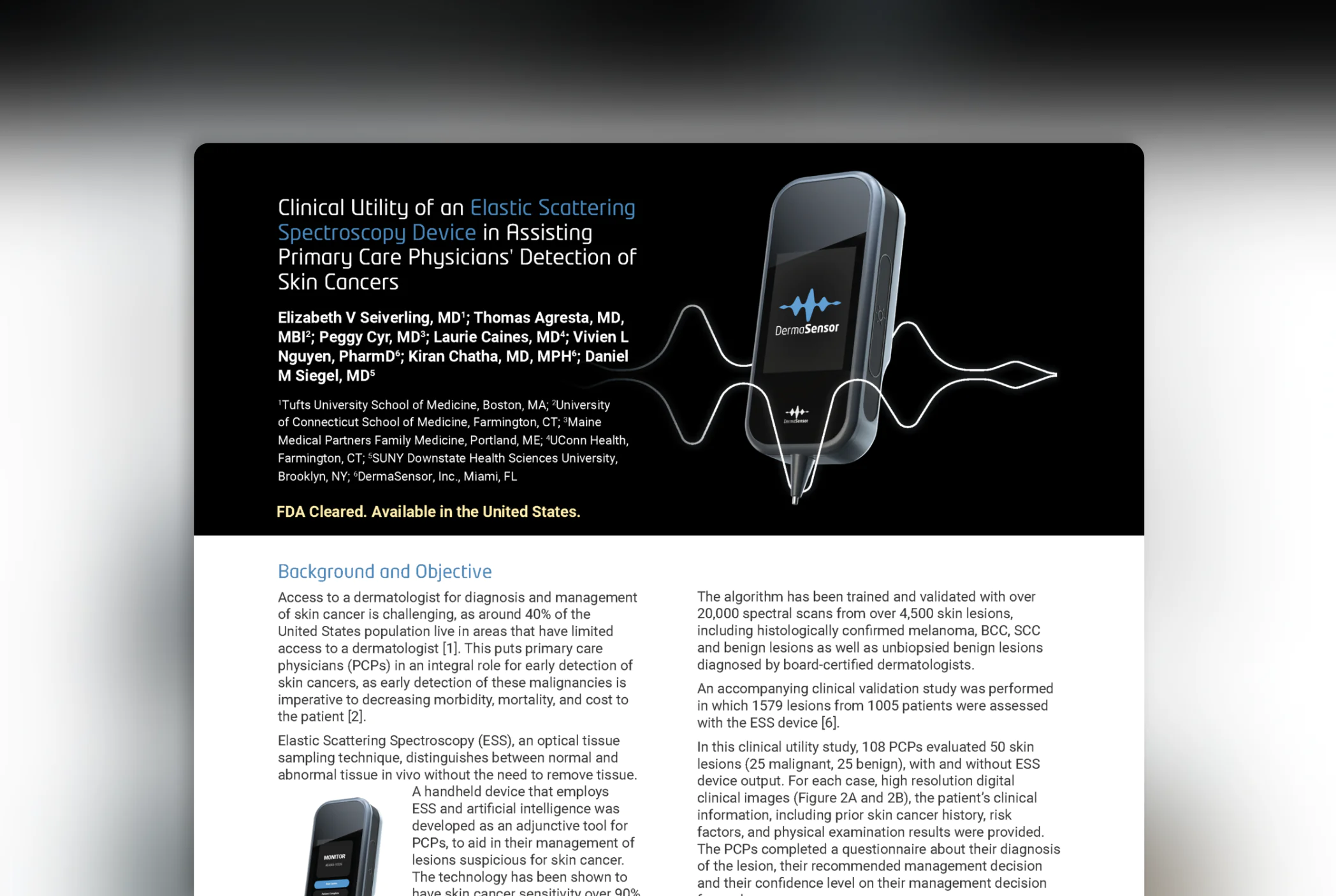
Background and Objective Access to a dermatologist for diagnosis and management of skin cancer is challenging, as around 40% of the United States population live in areas that have limited access to a dermatologist [1]. This puts primary care physicians (PCPs) in an integral role for early detection of skin cancers, as early detection of […]
 Read Now
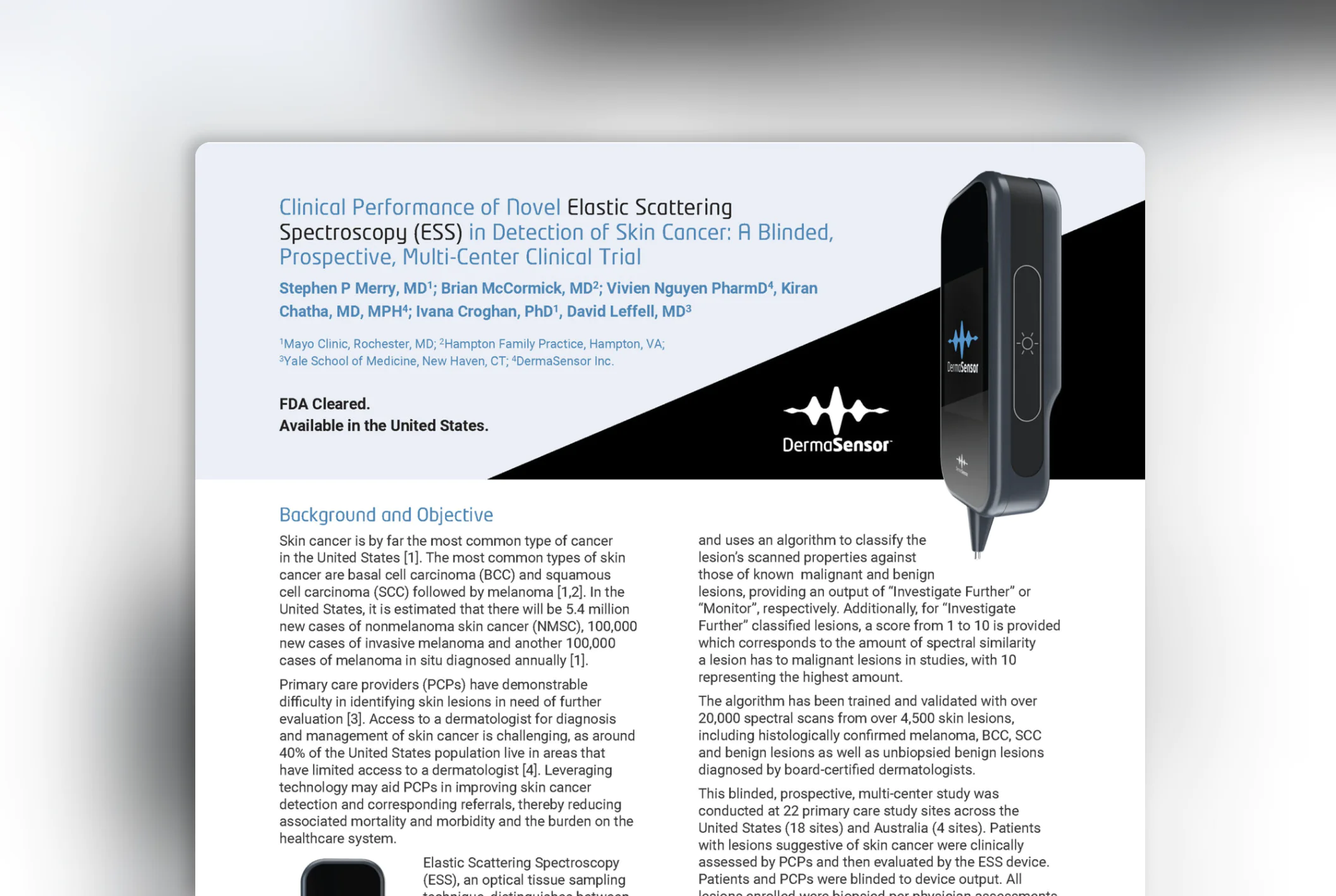
Stephen P Merry, MD1; Brian McCormick, MD2; Vivien Nguyen PharmD4, Kiran Chatha, MD, MPH4; Ivana Croghan, PhD1,, David Leffell, MD3 1 Mayo Clinic, Rochester, MD; 2 Hampton Family Practice, Hampton, VA; 3 Yale School of Medicine, New Haven, CT; 4 DermaSensor Inc. FDA Cleared.Available in the United States. Background and Objective Skin cancer is by far the most common type of cancer […]
 Read Now
