
Who We Serve: Clinical Skin Cancer Risk Detection Across Multiple Care Settings
Suspicious skin lesions are one of the most common findings in clinical practice – and one of the most difficult to evaluate without the right tools. DermaSensor is designed for healthcare providers who need an objective, point-of-care solution to support their evaluation.

Why Healthcare Providers Choose DermaSensor
-
96% Sensitivity
Demonstrated sensitivity for detecting all common skin cancers in pivotal clinical trials.
-
FDA-Cleared
The first automated, point-of-care device indicated for BCC, SCC, and melanoma.
-
Zero-Friction Workflow
Provides an objective “Monitor” or “Investigate” result immediately.
-
Improved Outcomes
Improved Outcomes
Use of the device resulted in a 30-52% relative reduction in missed skin cancers (false-negative referrals). -
Clinician-Only
Available exclusively to healthcare professionals; not for consumer or home use.
Who is DermaSensor For?
Clinical Skin Cancer Risk Detection Across Care Settings
DermaSensor is a clinical skin cancer risk detection tool built for healthcare providers, not consumers. The device is cleared for use by physicians in primary care settings.
It is not a screening app. It is not intended for use at home by patients. DermaSensor is designed for provider use at the point of care, during the patient visit.
The device uses Elastic Scattering Spectroscopy (ESS) to assess tissue beneath the skin surface and provide an objective result. That result gives clinicians additional information to support their clinical judgment when evaluating a lesion that may be suspicious for skin cancer.
This technology was not developed to replace your clinical judgment but as an adjunctive tool to aid your clinical decision-making at the point of care. The AI algorithm was developed and validated on over 20,000 scans, comprised of over 4,000 benign and malignant lesions. The data provides a real-time, objective result for skin cancer to augment your management decisions.
Learn more about the technology on the DermaSensor skin cancer detection device page.

Clinical Use Cases for DermaSensor Across Care Settings
DermaSensor is used across a range of clinical settings where providers regularly encounter suspicious skin lesions. The device fits into existing workflows without requiring special training or certifications.
The following clinical settings reflect where DermaSensor is currently used and evaluated.

Family Medicine
Family medicine practitioners are the first line of defense in skin cancer detection, yet they often face the highest volume of ambiguous lesions during routine patient screenings.
-

The Problem
PCPs face high rates of diagnostic uncertainty at the point of care. Without objective data, the default is often a “just-in-case” referral, which adds pressure to an already stretched dermatology pipeline.
-
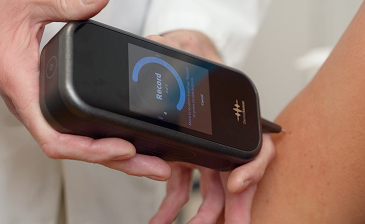
The Solution
Skin Cancer Detection for Family MedicineDermaSensor provides an objective “Monitor” or “Investigate Further” result in seconds, helping clinicians make more informed decisions about next steps without waiting for a dermatology appointment.


Internal Medicine
Internal medicine physicians manage complex patients with multiple comorbidities. Skin findings in this population are common and can easily be deprioritized during a busy visit.
-
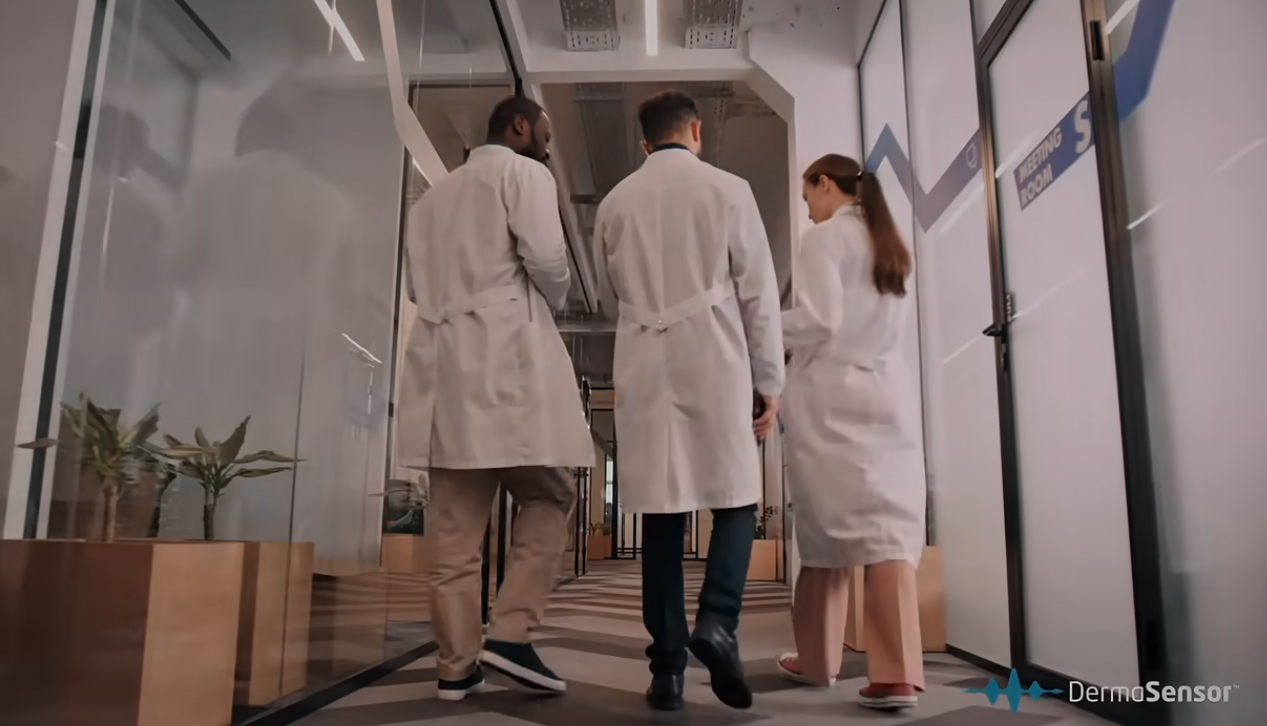
The Problem
In a high-volume internal medicine setting, lesion evaluation is rarely the primary reason for the visit. Suspicious findings can be overlooked or deferred.
-
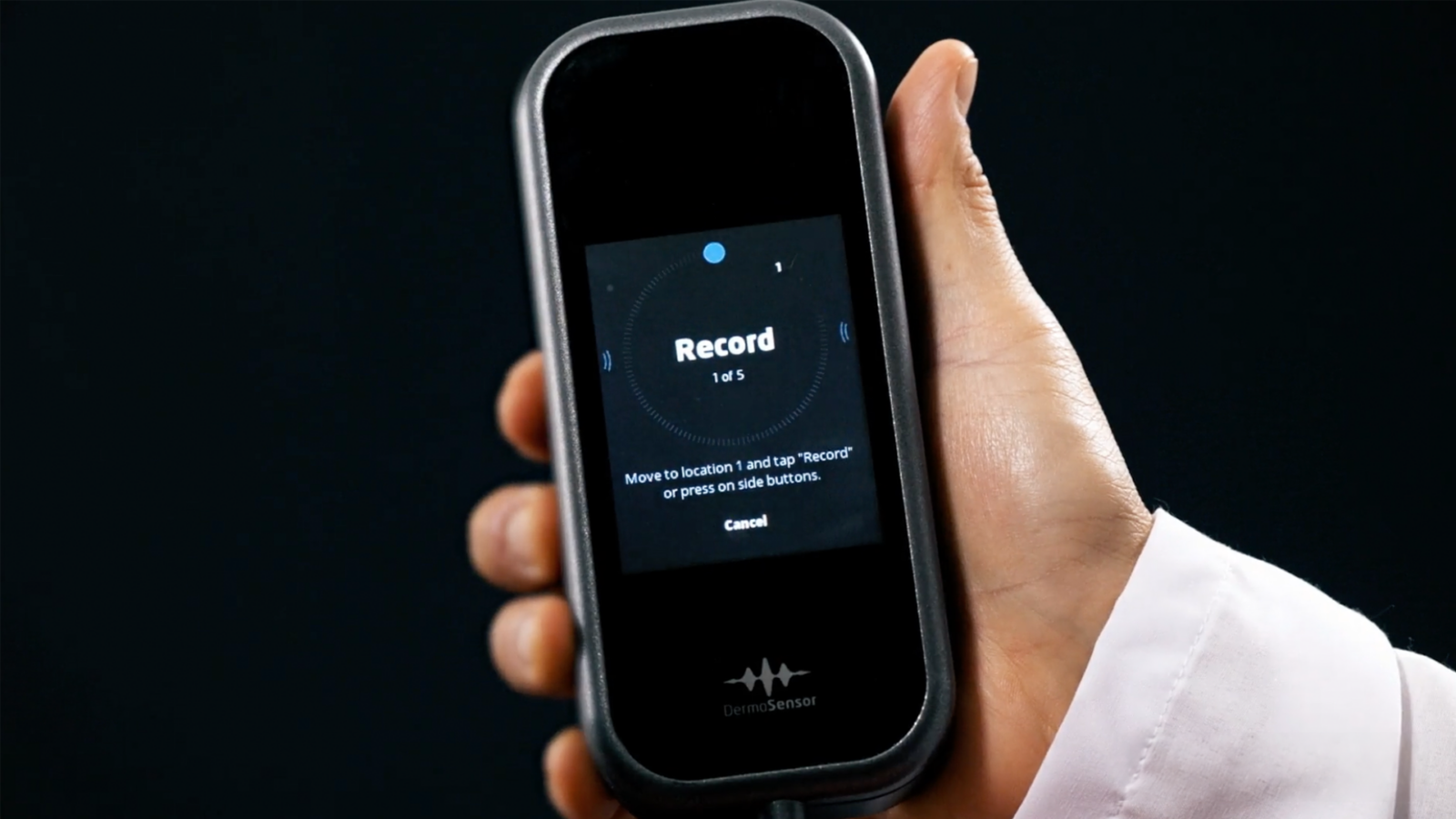
The Solution
DermaSensor helps internal medicine providers incorporate lesion evaluation into routine care, reducing the risk that a suspicious finding goes unassessed.


Concierge Practices
Concierge providers deliver comprehensive, relationship-based care with extended visit times. DermaSensor fits naturally into this model, supporting high-quality, in-office lesion evaluation.
-

The Problem
Patients in concierge settings expect immediate, definitive answers. Sending a patient home with a “wait and see” recommendation creates anxiety.
-

The Solution
DermaSensor provides an objective, point-of-care result during the visit, giving providers and patients greater confidence.

Request a full compendium of our published clinical studies and whitepapers

What Makes DermaSensor Different From Consumer Skin Cancer Apps?
Consumer skin cancer apps use smartphone cameras to analyze images of skin lesions. These tools are not currently FDA Cleared for clinical diagnosis and are not designed for use in a medical setting.
DermaSensor is not an image-based app. It uses ESS technology to assess the biological properties of tissue beneath the skin surface, a fundamentally different method that requires a trained clinician to operate.
The distinction matters. A consumer tool and a point-of-care clinical device operate under entirely different standards of evidence, regulatory oversight, and clinical intent.

Is DermaSensor Right for Your Practice?
If you are a physician who regularly evaluates suspicious skin lesions and wants an objective, non-invasive tool to support that evaluation, DermaSensor is designed for your clinical environment. Whether you practice in a family medicine clinic, a concierge setting, or a multi-site health system, DermaSensor is built to fit your workflow without adding complexity.
-
Clinical Evidence
Our technology has been shown to have skin cancer sensitivity over 90% in various prospective, multi-center studies when compared to gold-standard dermatopathology results.
-
Reimbursement Support
We provide dedicated support, including help with documentation preparation for government and private insurance plans.
-
Physician Finder
Our online directory helps new patients discover your practice when they search for providers who offer skin cancer detection using our device.
Who We Serve - FAQs
What types of healthcare providers use DermaSensor?
DermaSensor is used by licensed healthcare providers who evaluate suspicious skin lesions, including family medicine physicians, internal medicine physicians, community health physicians, and practice managers. It is designed for point-of-care clinical use across a range of medical settings.
What clinical settings is DermaSensor used in?
DermaSensor is used in primary care, internal medicine, concierge practices, and health systems. It is designed for point-of-care use during routine patient visits where a clinician is evaluating a suspicious skin lesion.
How does DermaSensor support clinical skin cancer detection?
DermaSensor uses Elastic Scattering Spectroscopy (ESS) to assess tissue beneath the skin surface and provide an objective risk result. This gives clinicians additional information to support their evaluation of suspicious lesions and clinical decision-making.
Is DermaSensor different from a skin cancer detection app?
Yes. Consumer skin cancer apps use smartphone cameras to capture images of lesions. DermaSensor uses ESS technology to assess tissue beneath the skin surface and is FDA Cleared for clinical use – a fundamentally different standard from consumer image-based tools.
Can health systems deploy DermaSensor across multiple locations?
DermaSensor is designed to support consistent, point-of-care lesion assessment across multi-site clinical environments. It helps reduce diagnostic variability between providers and locations.
I am a patient. Where can I find a provider that uses DermaSensor?
You can locate clinics using DermaSensor through the DermaSensor Physician Finder. Search by ZIP code, city, or state to find a participating provider near you.
RISK INFORMATION
From Limitations paragraph in DEN23008
Important Risk Information: The performance of the device has not been specifically evaluated in patients with increased risk for skin cancer, e.g., inherited or drug-induced photosensitivity; genetic predisposition to melanoma or basal cell carcinoma (BCC); immune compromise; or other medical conditions that increase the risk of skin cancer of its metastasis. The device is intended to assist in clinical decisions related only to the skin malignancies melanoma (including severely atypical nevi), squamous cell carcinoma (SCC), and BCC. It has been tested on each of these three common skin cancer types but has not been tested on rare skin cancer types; thus, it should not be used for lesions that are suggestive of malignancies other than melanoma BCC and/or SCC. The device is intended for use on primary lesions only and has not been tested on lesions that are previously biopsied, recurrent, or metastatic; on scars, tattoos, sunburned skin, or within a hairy area; or which are located on palms, soles, mucosal surfaces, genitals, ears, within 1 cm of the eye, or under nails. The device is not intended to be used as a stand-alone diagnostic device. The device is not intended to replace biopsy. The device is not intended to replace clinical decision making.
80-0009.4_v3
